
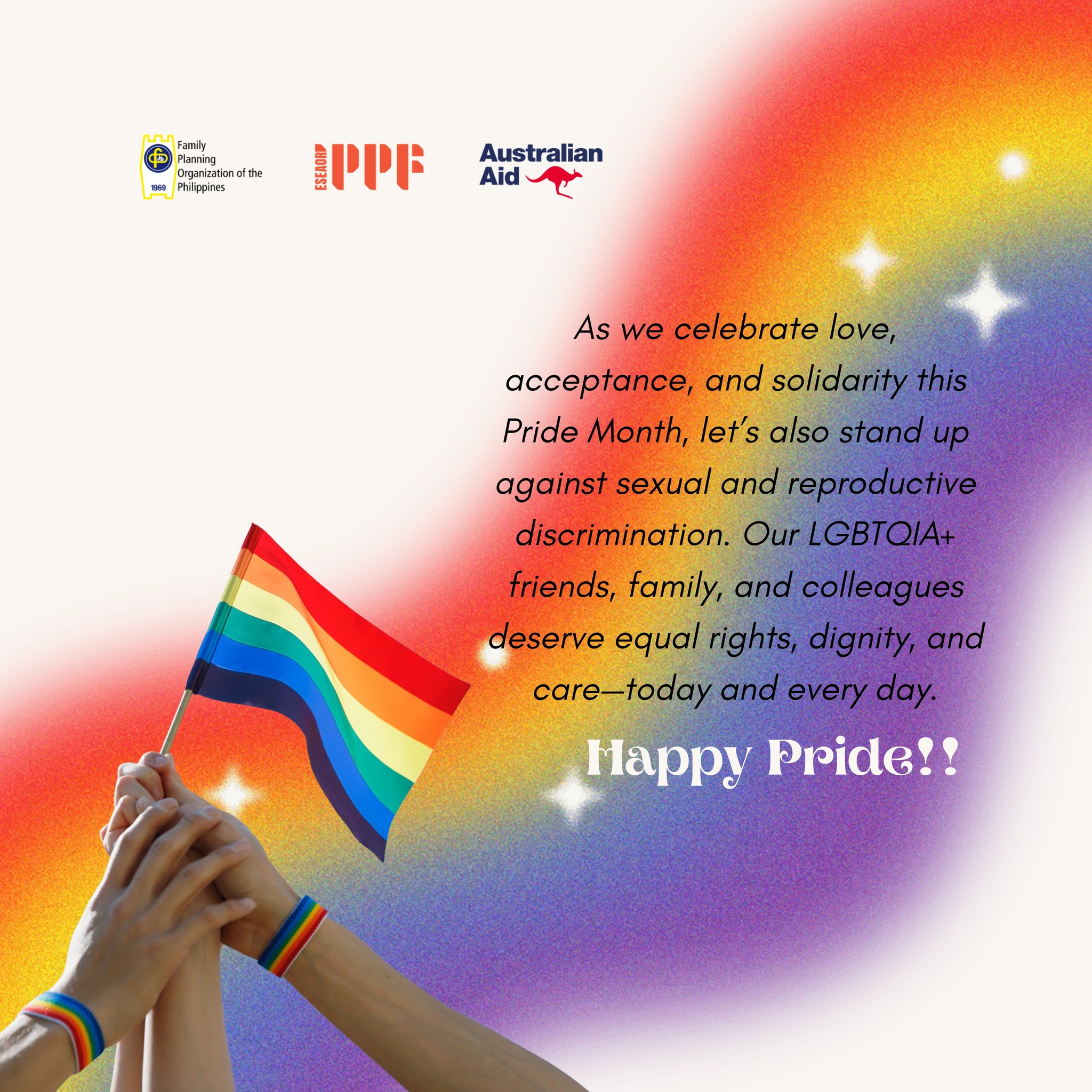
Every June, major streets and cities across the country transform into a vibrant display of solidarity. Rainbow flags line the avenues, historic landmarks light up, and thousands gather to march. It is a powerful testament to the resilience, joy, and deep cultural presence of the Filipino LGBTQIA+ community.
Yet, beneath the surface of this vibrant celebration lies an enduring contradiction. The Philippines is often painted as an accepting haven for the LGBTQIA+ community, but a closer look reveals that what exists is merely a conditional tolerance, not true acceptance, and certainly not equal rights. In the Philippines, Pride is a celebration, but fundamentally, it remains a protest—isang pakikibaka—against systemic prejudice and structural neglect.
This month invites us to look beyond the festivities and confront a critical frontier of human dignity: the intersection of discrimination, societal stigma, and the fundamental right to Sexual and Reproductive Health and Rights (SRHR).
For many queer Filipinos, navigating daily life means navigating a minefield of erasure. The discrimination they face is not only loud, it lives in the casual belittling, the mocking caricatures in media, and the persistent societal demand that they perform or entertain to justify their space in the room. This pervasive lack of respect chips away at an individual’s sense of safety and self-worth.
This societal disdain manifests sharply when members of the community attempt to claim their Sexual and Reproductive Health and Rights. SRHR is not just about medical consultations; it is about the right to make decisions about one’s own body, to live free from violence, and to access accurate information and care without fear of judgement.
Instead, the reality is in a society heavily governed by traditional dogmas, young LGBTQIA+ individuals face severe institutional barriers to basic healthcare, where seeking routine sexual health information often elicits moral scrutiny and open hostility rather than professional guidance. This prevailing stigma transforms essential wellness checks into deeply intimidating experiences, forcing many to suffer in silence and compromise both their physical and mental well-being out of fear of judgment or involuntary outing. Furthermore, this systemic devaluation extends to a profound lack of institutional respect, evident when transgender identities are dismissed as fleeting phases or when same-sex partners are denied critical medical decision-making rights during crises. Together, these compounding prejudices send a clear message that their health, safety, and very identities are not deemed worthy of institutional protection
True systemic change requires translating progressive rhetoric into actionable policies that protect marginalized communities from discrimination. For instance, while corporations and organizations frequently champion diversity during pride campaigns, true advocacy demands institutional accountability, such as lobbying for comprehensive anti-discrimination legislation and ensuring equal healthcare access. By dismantling deep-seated prejudices and embedding inclusivity into the law, society can move past symbolic gestures and secure lasting human rights for every individual.
Pride in the Philippines is rooted in a long history of courage—from the early trailblazing marches of the 1990s to the community-led grassroots networks filling the gaps in public education and care today. It serves as a reminder of how far the movement has come, but more importantly, it is a compass directing us toward the vital work that remains.
By demanding comprehensive sexual and reproductive rights and unconditionally defending the dignity of every individual, we build a society where love and identity are not merely tolerated, but where human lives are fully protected, cared for, and valued. Let us recommit to the quiet, vital work of true equity. Because equality is only real when it safeguards our rights, our dignity, and our lives.
𝑯𝒂𝒑𝒑𝒚 𝑷𝒓𝒊𝒅𝒆!