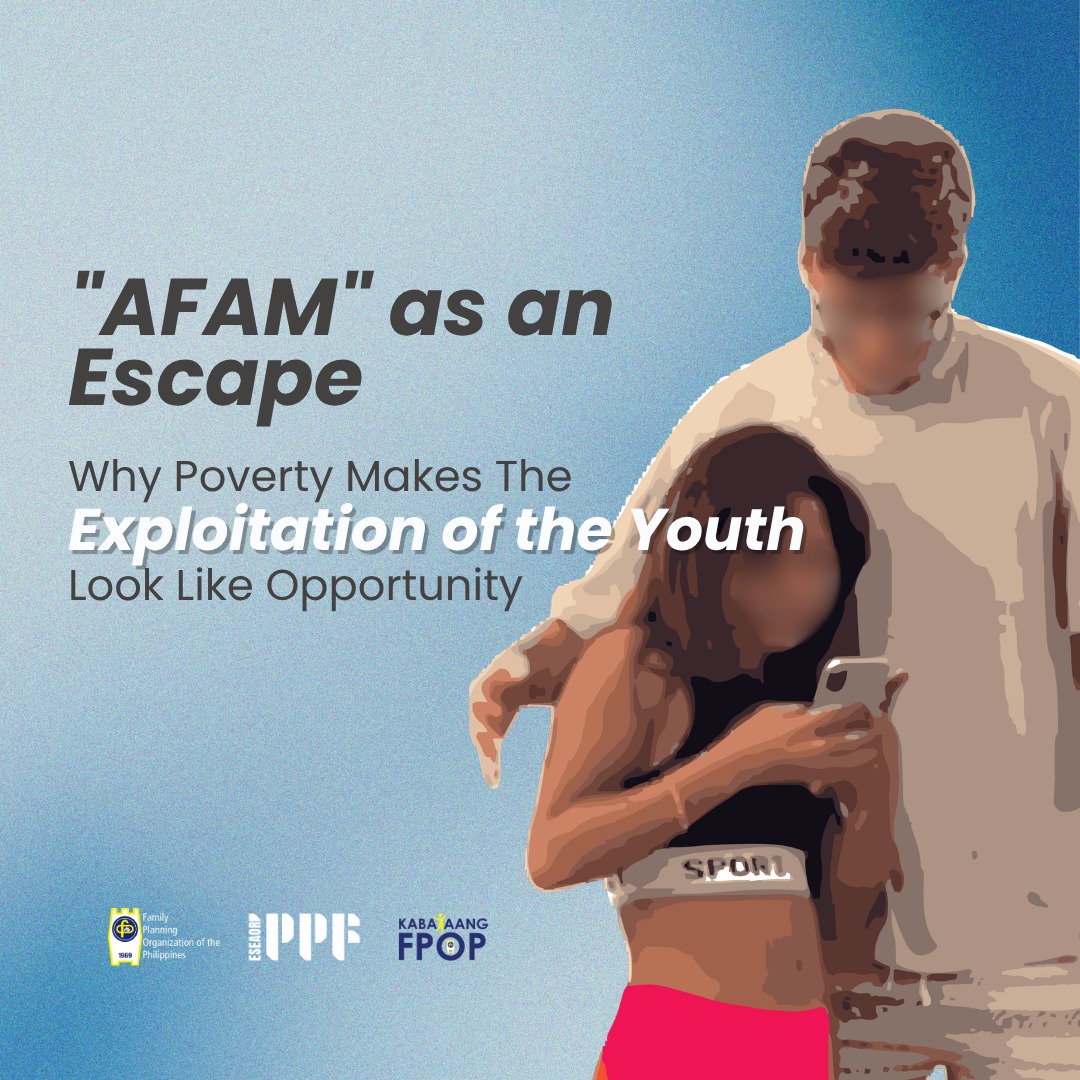
The recent issue involving a young trans girl and her “𝑨𝑭𝑨𝑴” reflects a reality where opportunity can feel out of reach, and unequal relationships may begin to appear as a way out and personal empowerment.
For many Filipino youth, vulnerability to exploitation is shaped not only by individual choices, but by poverty, grooming, limited opportunities, and unequal power relations. Because these gaps persist, exploitation can be mistaken for opportunity, especially among young people. Protecting Filipino adolescents means addressing these conditions at their roots. It requires ensuring access to 𝐂𝐨𝐦𝐩𝐫𝐞𝐡𝐞𝐧𝐬𝐢𝐯𝐞 𝐒𝐞𝐱𝐮𝐚𝐥𝐢𝐭𝐲 𝐄𝐝𝐮𝐜𝐚𝐭𝐢𝐨𝐧 (𝐂𝐒𝐄) so adolescents can understand consent, rights, and healthy relationships, alongside accessible health services, safe and affirming spaces, and meaningful economic and educational opportunities to make safe, informed, and dignified choices, and to shape their futures on their own terms.
As duty bearers, trusted adults must ensure that adolescents are supported in understanding their rights and are situated in environments that affirm safety, dignity, and agency.